

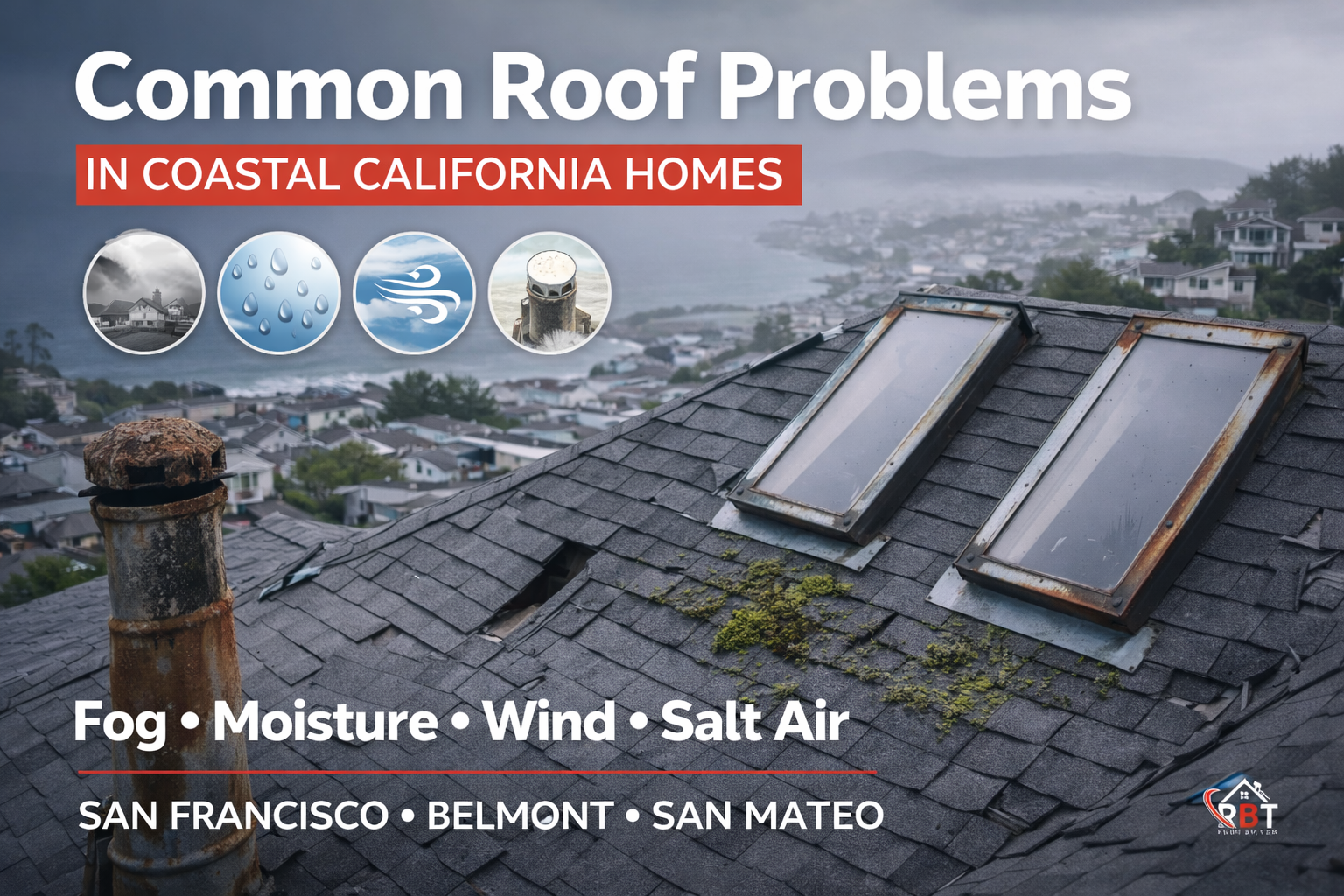
Living in Coastal California has its advantages. The Bay Area offers beautiful scenery, mild weather, and proximity to the Pacific Ocean. However, the same coastal environment that makes cities like San Francisco, Belmont, and San Mateo so desirable can also be tough on your home—especially your roof.
Roofs in coastal regions face unique challenges that homeowners inland rarely experience. Constant fog, ocean moisture, strong coastal winds, and salt air can slowly wear down roofing materials, leading to leaks, structural damage, and costly repairs if left unaddressed.
At Roof by Tom, we’ve spent over 20 years helping homeowners across the Bay Area repair and replace roofs damaged by coastal conditions. Understanding the most common roofing problems caused by this climate can help you protect your home and avoid expensive surprises.
In this guide, we’ll explore the most frequent roof problems in coastal California homes and explain how to prevent them.
Why Coastal Weather Is Hard on Roofs
Homes in coastal cities experience a very different environment than homes inland.
Typical weather conditions in places like San Francisco, Belmont, San Mateo, Burlingame, and Redwood Cityinclude:
- Morning and evening fog
- High humidity
Salt air carried from the ocean- Strong coastal winds
- Seasonal winter storms
While these conditions may seem mild compared to extreme climates, the constant exposure over many years slowly degrades roofing systems.
Roofing materials expand and contract due to moisture and temperature changes. Salt particles settle on surfaces and accelerate corrosion. Wind can lift shingles and weaken flashing.
Over time, these environmental factors combine to create several common roof problems.
1. Roof Leaks Caused by Moisture and Fog
One of the most common roofing problems in coastal California is roof leaks caused by constant moisture exposure.
In cities like San Francisco, fog can linger for hours each day, leaving roofs damp even when it hasn’t rained.
Why Moisture Causes Roof Damage
Moisture slowly seeps into small cracks or gaps in roofing materials. Over time, this moisture can:
- weaken shingles
- damage underlayment
- rot wooden roof decking
- cause interior ceiling stains
- lead to mold growth
Homeowners often don’t notice leaks until the damage has already spread inside the attic or walls.
Signs Your Roof May Be Leaking
Watch for these warning signs:
- water stains on ceilings
- peeling paint near rooflines
- damp attic insulation
- musty smells
- visible roof discoloration
If you notice any of these issues, it’s important to schedule a professional roof inspection before the next rainstorm arrives.
2. Salt Air Corrosion
Homes located near the coast experience something many homeowners don’t think about: salt corrosion.
Salt carried in ocean air can accumulate on roofing materials, metal flashing, nails, vents, and gutters.
How Salt Damages Roofing Systems
Salt speeds up oxidation and corrosion on metal components, which can lead to:
- rusted flashing
- weakened fasteners
- damaged gutters
- failing skylight seals
- deteriorating roof vents
Over time, these small issues allow water to enter the roofing system.
Metal roofs, flashing, and gutters are especially vulnerable in coastal environments.
Homes Most Affected
Properties located within a few miles of the ocean—especially in Pacifica, Daly City, San Francisco, and parts of San Mateo County—tend to experience the most salt damage.
3. Wind Damage from Coastal Storms
Another major roofing concern in coastal California is wind damage.
While the Bay Area doesn’t experience hurricanes, coastal winds and winter storms can still cause serious problems.
Strong gusts can:
- lift shingles
- loosen flashing
- break sealant bonds
- dislodge roof tiles
- damage skylights
Once wind lifts a section of roofing material, water can easily enter the roof structure.
Areas Most Affected by Wind
Homes located on hills or exposed ridges—common in cities like Belmont and San Francisco—are particularly vulnerable to wind-related roof damage.
4. Moss, Algae, and Mold Growth
Because coastal areas remain moist for long periods, roofs often develop moss and algae growth.
You may notice dark streaks or green patches forming on shingles.
While moss may look harmless, it can actually cause serious damage.
Why Moss Is Dangerous for Roofs
Moss traps moisture against roofing materials. Over time, this moisture can:
- weaken shingles
- cause wood rot
- loosen roofing materials
- shorten the lifespan of the roof
Algae and mold can also spread across roofing surfaces, creating additional moisture retention.
Preventing Moss Growth
Professional roof cleaning and proper roof ventilation can reduce moss buildup.
In some cases, installing algae-resistant shingles can help prevent the problem.
5. Flashing Failure
Flashing is one of the most important parts of a roofing system.
Flashing is the thin metal installed around areas where the roof meets other structures, such as:
- chimneys
- skylights
- roof valleys
- vents
- walls
Flashing prevents water from entering the roof structure.
However, coastal weather can weaken flashing over time.
Why Flashing Fails
Salt air and moisture cause flashing to:
- corrode
- loosen
- crack
- separate from roofing materials
Once flashing fails, leaks often appear quickly.
This is one of the most common repair jobs we see in Belmont, San Mateo, and San Francisco homes.
6. Aging Roof Materials
Many homes in the Bay Area were built between the 1950s and 1980s, meaning many roofs are already approaching the end of their lifespan.
Even high-quality roofing materials eventually break down.
Typical roof lifespans include:
- asphalt shingles: 20–25 years
- tile roofs: 40–50 years
- metal roofs: 40+ years
If your roof is more than 20 years old, coastal weather may accelerate its deterioration.
How to Protect Your Roof in Coastal California
While coastal weather can’t be controlled, homeowners can take several steps to reduce roof damage.
1. Schedule Annual Roof Inspections
A professional inspection once a year can identify small problems before they become major repairs.
2. Clean Gutters Regularly
Clogged gutters trap moisture and allow water to back up under roofing materials.
3. Trim Nearby Trees
Branches can damage shingles during windy weather.
4. Repair Small Issues Quickly
Replacing a few shingles or repairing flashing early can prevent larger structural problems.
5. Consider Upgrading Roofing Materials
Modern roofing materials are designed to better withstand coastal environments.
When Roof Repair Isn’t Enough
Sometimes repairs are only a temporary solution.
If your roof has widespread damage or is nearing the end of its lifespan, a full roof replacement may be the most cost-effective solution.
New roofing systems offer:
- improved weather resistance
- better insulation
- energy efficiency
- longer lifespan
- improved home value
A professional contractor can evaluate your roof and help determine the best option.
Why Homeowners Trust Roof by Tom
At Roof by Tom, we specialize in roofing systems designed to handle the unique challenges of coastal California.
Our team has over 20 years of experience serving homeowners in San Francisco, Belmont, San Mateo, and surrounding Bay Area communities.
We provide:
- roof inspections
- roof repairs
- roof replacements
- skylight repairs
- storm damage repairs
Our goal is simple: protect your home with a roof built to last.
Frequently Asked Questions
How often should I inspect my roof in coastal California?
We recommend at least one professional inspection per year, especially before the winter rainy season.
Does coastal weather shorten roof lifespan?
Yes. Moisture, salt air, and wind can accelerate wear and tear on roofing materials.
Can roof repairs be done during winter?
Yes. Many roofing repairs can be completed during winter as long as conditions are safe.
What is the most durable roofing material for coastal areas?
Metal roofing, high-quality asphalt shingles, and tile roofs all perform well in coastal environments when properly installed.
How do I know if my roof needs repair or replacement?
A professional inspection is the best way to determine the condition of your roof and the most cost-effective solution.
Final Thoughts
Living near the coast offers incredible lifestyle benefits, but it also means your home faces constant exposure to moisture, wind, and salt air.
Understanding the most common roof problems in coastal California homes can help you protect your property and prevent costly repairs.
If you suspect your roof may be damaged—or if it’s been years since your last inspection—don’t wait for a leak to appear.