
Your roof is one of the most important components of your home. It protects everything beneath it — your family, your belongings, and the structure itself. But like every part of your house, your roof doesn’t last forever.
Many homeowners struggle with a common question:
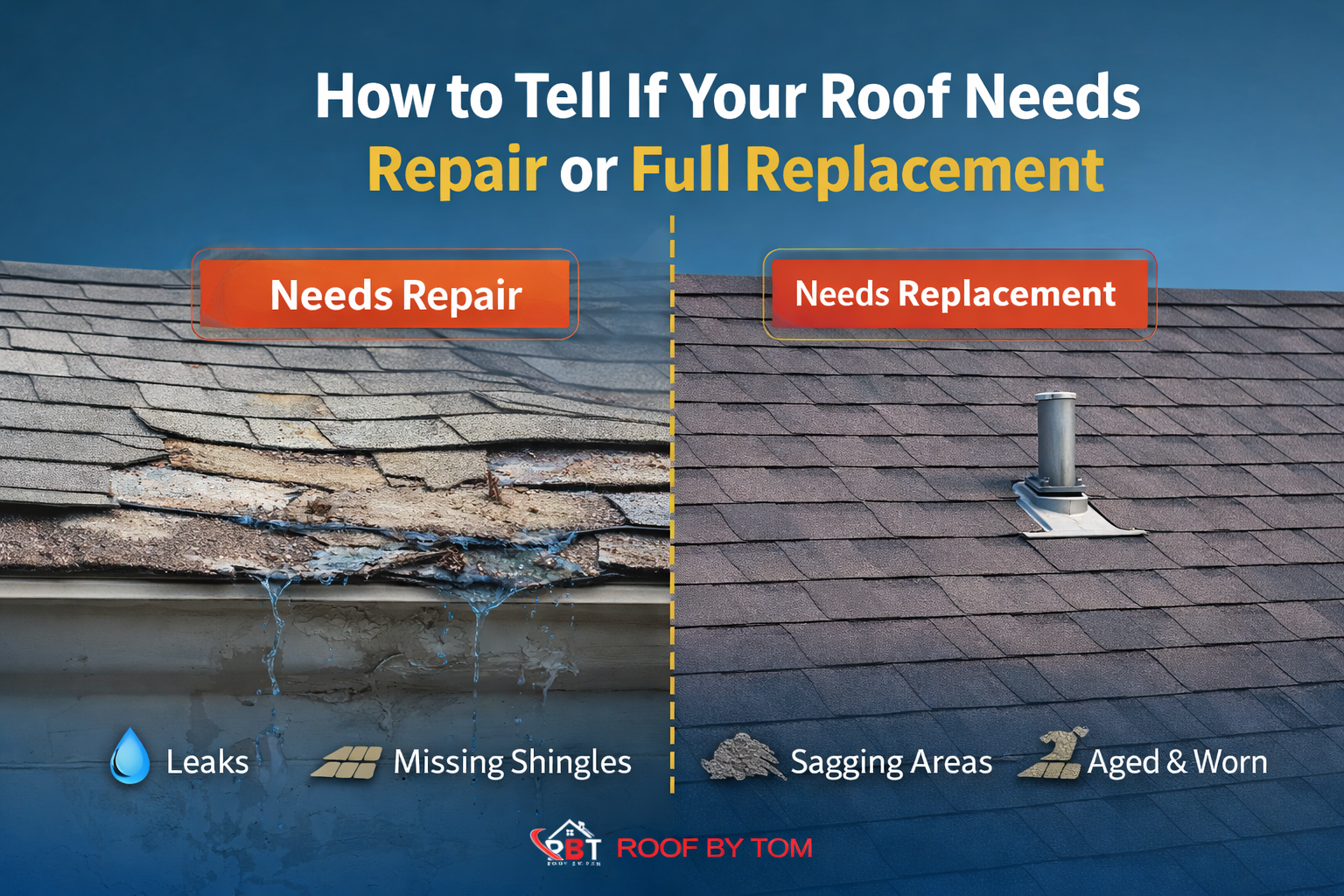
“Does my roof need a repair, or is it time for a full replacement?”
Understanding the difference can save you thousands of dollars and help you make the smartest decision for your property.
In this guide, we’ll explain the most common warning signs your roof needs attention, how to determine whether repair or replacement is the right solution, and when it’s time to call a professional roofing contractor.
Why Roof Problems Should Never Be Ignored
Small roofing problems rarely stay small. A loose shingle or a tiny leak might seem harmless today, but over time it can lead to serious structural damage.
When moisture enters your roof system, it can cause:
• Mold growth
• Rotting wood
• Insulation damage
• Ceiling stains
• Electrical hazards
• Structural weakening
• Mold growth
• Rotting wood
• Insulation damage
• Ceiling stains
• Electrical hazards
• Structural weakening
This is why roofing professionals always recommend early inspections and repairs before problems escalate.
The Lifespan of a Typical Roof
One of the first factors to consider when evaluating your roof is its age.
Different roofing materials have different lifespans.
Asphalt Shingles
Most common roofing material in the United States.
Average lifespan:
20–25 years
Asphalt Shingles
Most common roofing material in the United States.
Average lifespan:
20–25 years
Architectural Shingles
Higher quality asphalt product.
Average lifespan:
25–30 years
25–30 years
Metal Roofing
Extremely durable and energy efficient.
Extremely durable and energy efficient.
Average lifespan:
40–70 years
40–70 years
Clay or Concrete Tile
Common in California homes.
Average lifespan:
50+ years
Common in California homes.
Average lifespan:
50+ years
If your roof is approaching the end of its expected lifespan, replacement is often the more cost-effective solution.
The Most Common Signs Your Roof Needs Repair
Many roofing issues can be fixed if caught early. Here are the most common signs that a roof repair may be sufficient.
1. Missing or Damaged Shingles
Shingles act as your roof’s protective outer layer. When they become damaged, your home becomes vulnerable to water intrusion.
Common shingle issues include:
• Cracked shingles
• Curling edges
• Missing shingles
• Granule loss
• Wind damage
• Cracked shingles
• Curling edges
• Missing shingles
• Granule loss
• Wind damage
If the damage is limited to a small section of the roof, a repair is often the best solution.
A professional roofer can replace the affected shingles and restore the roof’s protective barrier.
2. Minor Roof Leaks
A small leak doesn’t always mean your entire roof needs replacement.
Leaks often occur due to:
• Damaged flashing
• Improper installation
• Loose shingles
• Sealant failure around vents or skylights
In many cases, repairing the flashing or sealing the affected area can completely solve the problem.
However, if leaks occur in multiple locations, that could indicate a larger issue.
3. Flashing Damage
Flashing is the thin metal installed around roof penetrations such as:
• Chimneys
• Skylights
• Roof valleys
• Vents
When flashing becomes loose, rusted, or improperly sealed, water can easily enter your roof system.
Replacing or repairing flashing is typically a straightforward repair job.
4. Gutter Problems
Gutters play an important role in protecting your roof.
If gutters become clogged or detached, water may pool on the roof and cause damage.
Signs of gutter-related roof issues include:
• Water pooling at roof edges
• Rotting fascia boards
• Overflowing gutters
• Water pooling at roof edges
• Rotting fascia boards
• Overflowing gutters
Often, correcting the gutter system prevents further roofing problems.
Signs Your Roof May Need Full Replacement
In some cases, repairing your roof repeatedly becomes more expensive than replacing it altogether.
Here are the signs your roof may need complete replacement.
1. Your Roof Is Over 20–25 Years Old
Even if your roof looks fine from the ground, aging materials eventually deteriorate.
Older roofs often develop hidden problems such as:
• Brittle shingles
• Worn underlayment
• Failing sealant
• Brittle shingles
• Worn underlayment
• Failing sealant
Once a roof reaches the end of its lifespan, replacement becomes the safest option.
2. Sagging Roof Areas
A sagging roof is a serious structural warning sign.
This could indicate:
• Water damage
• Rotting roof decking
• Structural weakening
• Water damage
• Rotting roof decking
• Structural weakening
If the structure beneath the shingles is compromised, repairs alone will not solve the problem.
A full replacement — and possibly structural reinforcement — may be required.
3. Widespread Shingle Damage
When damage affects a large percentage of the roof, replacing individual shingles becomes impractical.
Examples include:
• Entire sections with missing shingles
• Severe granule loss
• Curling across most of the roof
At this stage, replacement often becomes the most cost-effective long-term solution.
4. Multiple Roof Leaks
If you notice leaks in different areas of the home, it usually means the roof system is failing overall.
Multiple leak points often indicate:
• Aging underlayment
• Structural movement
• Material deterioration
• Aging underlayment
• Structural movement
• Material deterioration
Repeated repairs will likely only delay the inevitable.
5. Rising Energy Bills
A damaged roof can significantly affect your home’s insulation and ventilation.
Signs include:
• Higher heating costs in winter
• Increased air conditioning use in summer
• Uneven temperatures inside the home
• Higher heating costs in winter
• Increased air conditioning use in summer
• Uneven temperatures inside the home
A new roof system can dramatically improve energy efficiency.
Roof Repair vs Replacement: Cost Comparison
Many homeowners hesitate to replace their roof due to the upfront cost.
However, repeated repairs can add up quickly.
For example:
Repairing leaks several times a year could eventually cost more than a full roof replacement.
Repairing leaks several times a year could eventually cost more than a full roof replacement.
A new roof provides:
• Long-term protection
• Increased property value
• Improved energy efficiency
• Peace of mind
• Long-term protection
• Increased property value
• Improved energy efficiency
• Peace of mind
The Importance of a Professional Roof Inspection
The best way to determine whether your roof needs repair or replacement is through a professional inspection.
During an inspection, roofing professionals evaluate:
• Shingle condition
• Flashing integrity
• Roof ventilation
• Structural stability
• Water damage
• Insulation condition
A detailed inspection helps homeowners make informed decisions.
How Often Should You Inspect Your Roof?
Most roofing experts recommend inspections:
• Once per year
• After major storms
• Before the winter rainy season
Regular inspections help detect problems early and prevent costly repairs.
The Benefits of Replacing Your Roof
While replacing a roof is a major project, it also offers significant advantages.
Improved Home Value
A new roof can increase property value and improve resale appeal.
Better Energy Efficiency
Modern roofing materials reflect heat and improve insulation.
Enhanced Curb Appeal
New roofing materials can completely transform the look of a home.
New roofing materials can completely transform the look of a home.
Peace of Mind
A new roof eliminates the stress of unexpected leaks.
Preventing Roof Damage in the Future
Proper maintenance can extend the life of your roof.
Key maintenance tips include:
• Clean gutters regularly
• Trim overhanging tree branches
• Schedule annual roof inspections
• Repair minor damage quickly
• Ensure proper attic ventilation
• Clean gutters regularly
• Trim overhanging tree branches
• Schedule annual roof inspections
• Repair minor damage quickly
• Ensure proper attic ventilation
Preventative care can add years to your roof’s lifespan.
Final Thoughts
Your roof works around the clock to protect your home from the elements. When problems arise, knowing whether to repair or replace your roof is essential for protecting your investment.
If your roof is showing signs of damage — such as leaks, missing shingles, sagging areas, or aging materials — it’s best to consult with a professional roofing contractor as soon as possible.
Early action can prevent costly damage and ensure your home stays safe and secure for years to come.
Frequently Asked Question
How do I know if my roof needs repair or replacement?
If the damage is limited to a small area, such as a few missing shingles or flashing issues, a repair may be sufficient. However, if your roof is over 20 years old, has multiple leaks, or shows widespread deterioration, a full replacement may be the better long-term solution.